

How To Make Faster Windows 10 Laptop
I am trying to resurrect an sometime but adept-in-its-mean solar day laptop for my son to use for his A-levels. I have bought a cheap 256GB SSD to improve the read/write speeds, merely information technology seems I am stuck with the electric current 4GB of memory. Its ii memory slots could support 8GB but 4GB DDR2 memory modules are prohibitively expensive at roughly £65 each. It doesn't seem to make sense spending that sort of money on outdated memory applied science for a ten-yr-onetime laptop.
What is the best way to fix Windows 10 so it runs fast on relatively limited memory? Is it worth using a different browser to Chrome? Is Microsoft Part too much of a resource hog?
There must be a lot of perfectly good machines awaiting an opportunity for a second life. Matt
Chip costs are driven by production volumes, so obsolete types of memory are no longer in production, or are very expensive to produce. Often, there are alternatives, such as ownership second-mitt memory modules, and cannibalising laptops sold on eBay for "spares or repair".
In this case, there are very few 2d-hand modules for sale. When DDR2 was standard, many laptops had 2GB, just very few had the 8GB that would need two 4GB modules.
If your laptop tin can apply ECC error correcting memory, so you might exist able to buy some of that. ECC retentiveness modules have an actress chip for parity checking, and were used in servers. Fifty-fifty decades agone, servers had lots of memory, so 4GB ECC chips should exist easier to discover.
On the bright side, 4GB laptops have been common for most of the by decade, and some people yet buy them. It'southward meliorate to take 8GB, simply 4GB is usable.
Lean Windows
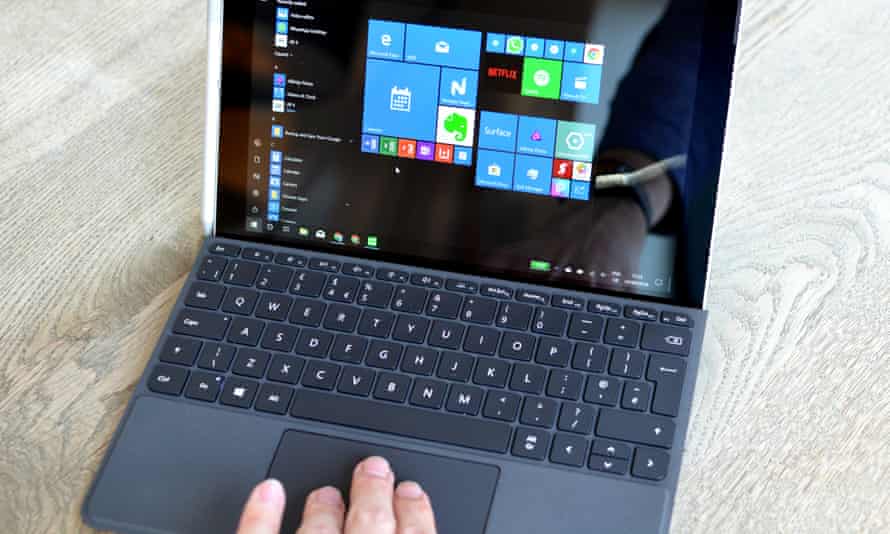
Microsoft has spent more than a decade making Windows more retentivity efficient. A laptop that could run Vista well in January 2007 tin probably run Windows 10 well today.
Of course, Microsoft had ulterior motives. One was to enable PC manufacturers to make cheaper laptops. Some other was to enable Windows to run on smartphones and tablets that only had 1GB or 2GB. Probably neither of those is notwithstanding important thanks to tumbling memory prices and the failure of Windows smartphones.
A couple of years ago, Microsoft experimented with a version of Windows ten called Windows Lean, but it didn't apply less retentiveness. Its primary purpose was to fit on tablets and cheap laptops with only 16GB or 32GB of storage. Thankfully, that idea seems to take been abandoned. Nobody should be buying laptops with less than 128GB of SSD, or a bigger difficult bulldoze.
Quick hits
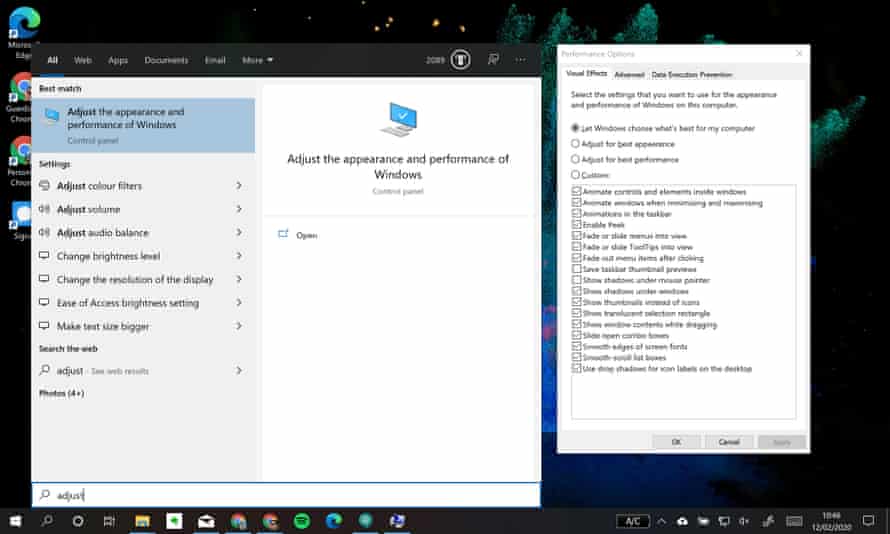
The simplest speed-upwardly routine is to tell Windows to optimise itself for functioning. To practice this, type "suit" in the Beginning menu'southward search box and click "Adjust the appearance and performance of Windows". This volition bring up the Operation Options properties sheet from the Control Panel. Select "Suit for best performance" and Windows volition drop all the fancy graphical effects such as sliding things in and out of view. You can use the Custom settings to retain any features y'all want to go along, such as "Show window contents while dragging".
Next, run the Command Panel, type "power" into the search box in the meridian right and select "Choose a power plan". Most laptops are set to "Counterbalanced". "Power saver" volition reduce performance to extend battery life. "High functioning" will deliver the best performance simply use more energy.
Windows memory direction
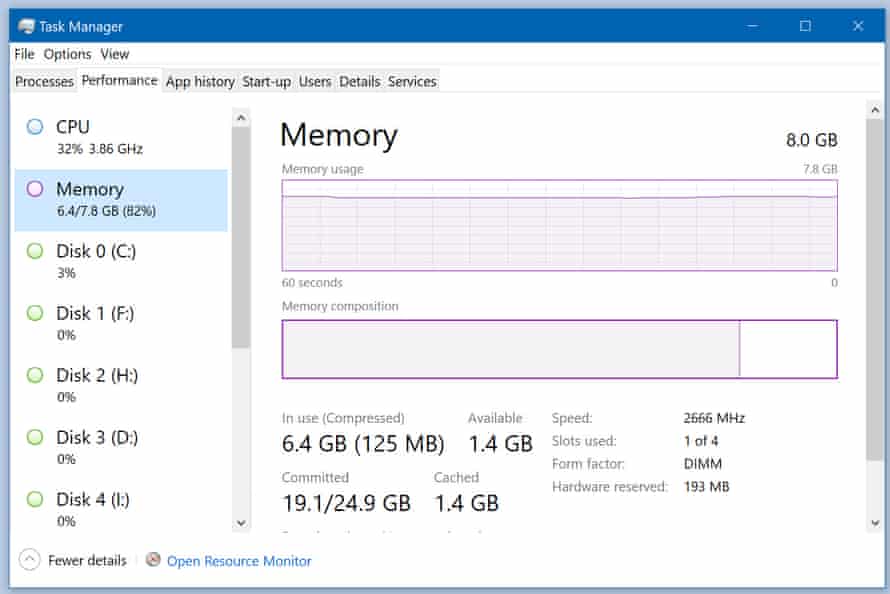
When we were using Windows XP and Vista, geeks could meliorate on Windows' employ of retentiveness. Those days have more or less gone. Windows 10 makes such good use of retentivity, its swapfile (pagefile.sys, hidden on your hard drive) and other resources that it is best left to do its thing.
In my experience, Windows 10 tin can use anything from 1.2GB to about 3.5GB or more, depending on how much retentivity you have. If yous have more, it will use more. What happens when it runs out of space? Information technology saves the pages of code it'due south not using to the swapfile and reloads them into RAM but when they are needed. That's one reason why fitting an SSD makes a laptop feel much more responsive: swapfile pages reload much faster.
In reality, Windows ten'south memory direction is more complicated than that. It distinguishes between many types of memory, depending on whether pages are in employ, can be swapped out when necessary, can be overwritten because they are no longer needed, or free. Type resmon into Windows 10's search box, run the Resource Monitor app, and click the Retention tab for a coloured representation of the RAM used for different purposes, including "hardware reserved".
What's eaten my RAM?
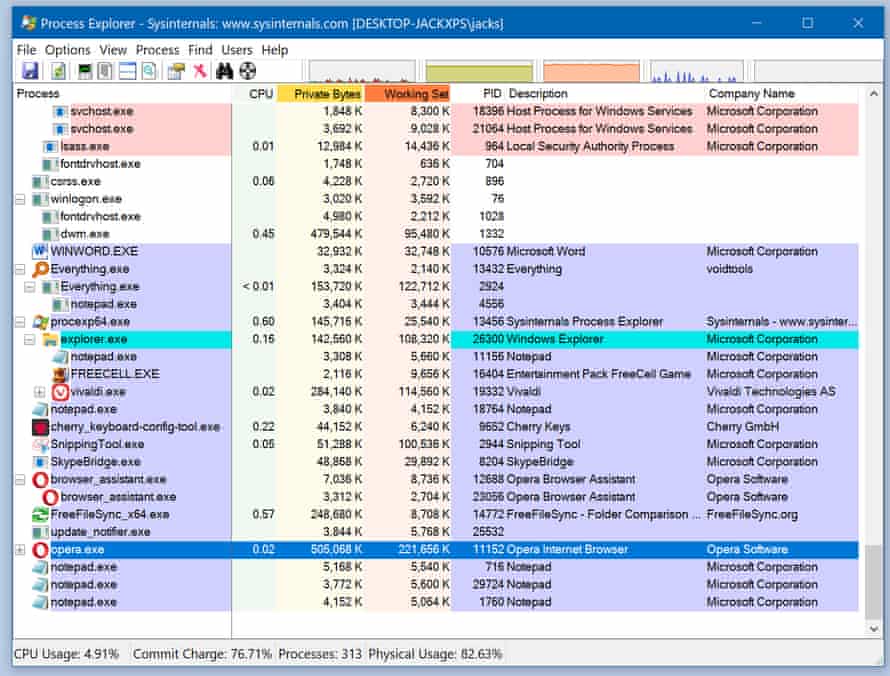
Sophisticated memory direction techniques – including compression – get in difficult to know how much memory any particular program is using. Should you lot include pages that are in RAM but not in use, that are in the swapfile, or utilise shared resources? Windows provides a lot of common code through dll library files, and if six programs are using the same megabytes of shared code, it'south counted vi times instead of once.
The Task Managing director provides a crude but useful guide. To run it, press Ctrl-Alt-Del or correct-click the taskbar and select Task Manager. Click on Proper name to sort apps to the top. The Retentivity cavalcade shows how much each program is using. To make the column easier to understand, correct-click in the header surface area, choose "Resources values" from the drib-downward menu, then Card and so Percents. On my PC, ii browsers, Opera and Vivaldi, are now using more 20% each, and nothing else matters. The next highest score is Voidtools' Everything, with 2.6%. Discussion 2010, with six documents open, is consuming 0.6%, and a small Excel spreadsheet 0.4%.
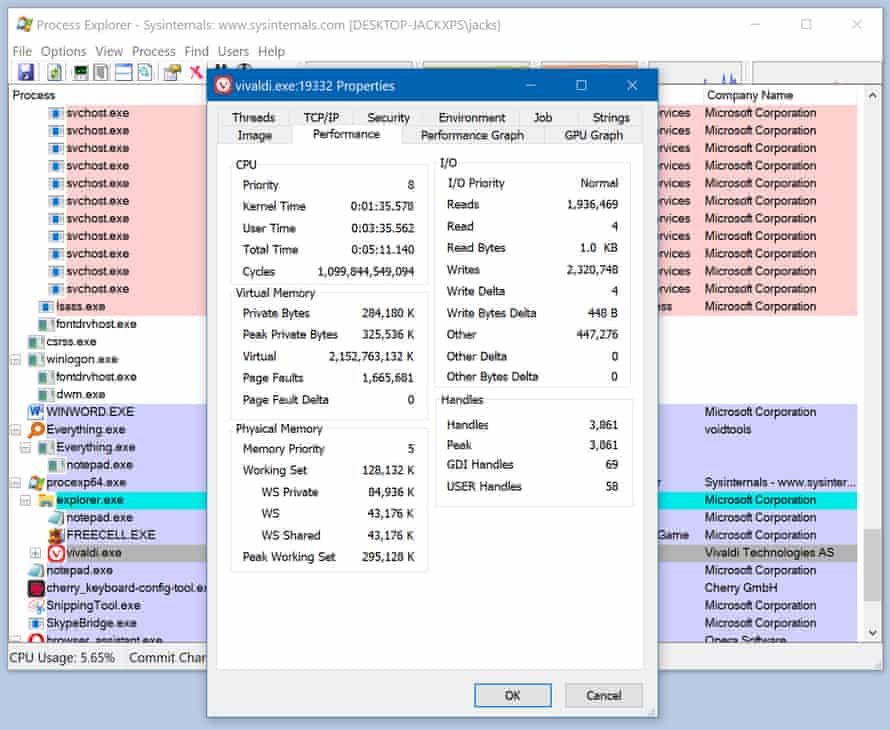
Microsoft'due south Process Explorer provides more details. Double-clicking a program's proper name tells you how it's using memory, how much code is shared, and how much virtual memory (ie swapfile space) it'south using. The Working Set Private number, which excludes shared code and swapfile space, tells you lot how much existent RAM a program is using at the fourth dimension. Patently, it can vary. As a general indicator, the Meridian Working Set number is probably as expert as any.
Once your laptop is up and running, a quick check with either utility will tell yous if any programs are using more retentiveness than they are worth.
Start-up programs and services
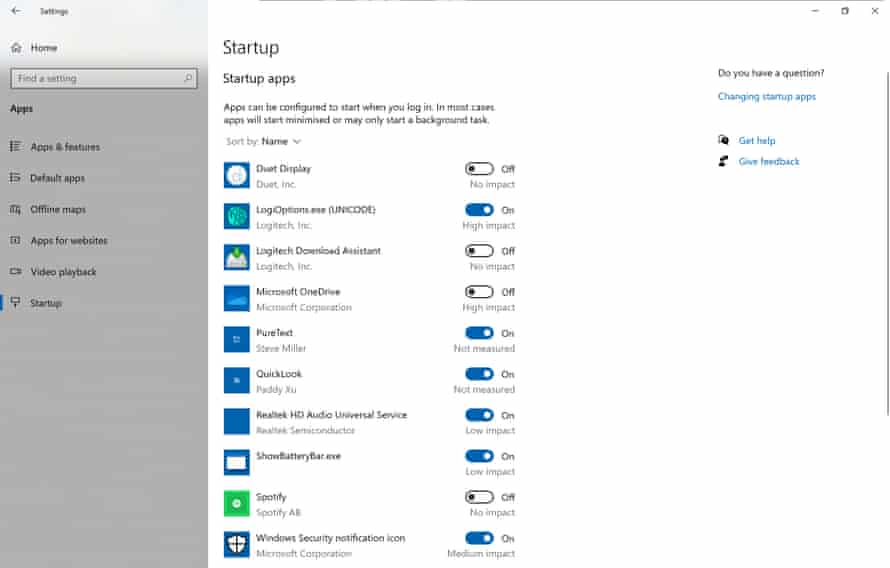
The Chore Manager has Start-upwardly and Services tabs that tell Windows what to load when it boots. Both are more or less obsolete. It is worth checking for start-up programs and disabling ones you don't want, merely do that from the Apps section of the Settings (cogwheel) app.
When nosotros were using clunky old XP and Vista, disabling services could make a big deviation, and some of united states swore by Blackness Viper'due south guides. Today, I wouldn't make the effort, and Blackness Viper stopped providing service configurations with the Apr 2018 version of Windows 10.
If a procedure or service "goes rogue" – which can include a single browser tab – it's easier to observe it in Process Explorer, correct-click it, then suspend, restart or impale information technology. Job Manager likewise lets you suspend and kill tasks, which can be handy if malware grabs your browser.
Browser choice
Every Windows browser will run in 4GB, but the "lightest" common browser is Microsoft Edge. This is partly because it's depression on features and extensions, and partly because it'due south a modern Windows Store app. Store apps can be suspended in the background, though this is hidden away in the Privacy section of the Settings app, nether "Groundwork apps".
Only Microsoft is now switching to a heavier version of Edge based on open up source Chromium lawmaking, but like Google Chrome, Opera, Vivaldi, Brave and many others, except Firefox.
There's not much to choose between the Chromium-based browsers: they all consume massive amounts of memory and resource. Opera has mostly been the lightest, but "Edgium" could alter that. I've been using the beta examination version and information technology works well. Besides, the lawmaking has been de-Googled, which is a plus indicate for people avoiding Google's "surveillance capitalism".
Otherwise, the keys to managing browser retentiveness are not to install many extensions and non to open too many tabs. If you can't aid having hundreds, utilize a "lazy loading" browser. With lazy loading turned on, the browser will only reload or refresh current tabs when yous click on them. I once had more than 600 tabs in Firefox and near 300 in Vivaldi, and both still worked perfectly. Alternatively install a tab suspender such every bit the Neat Suspender for Chrome, which unloads dormant tabs but saves the URL so yous tin go straight back to it if y'all want. If the browser does slow downwards, just close and re-open information technology to gratis up some retention.
The onetime communication near turning information technology off and on once more has been replaced by "restart your browser".
Have y'all got a question? Email information technology to Ask.Jack@theguardian.com
Source: https://www.theguardian.com/technology/askjack/2020/feb/13/how-can-i-speed-up-a-windows-10-laptop
Posted by: morgandaylloween.blogspot.com
0 Response to "How To Make Faster Windows 10 Laptop"
Post a Comment